
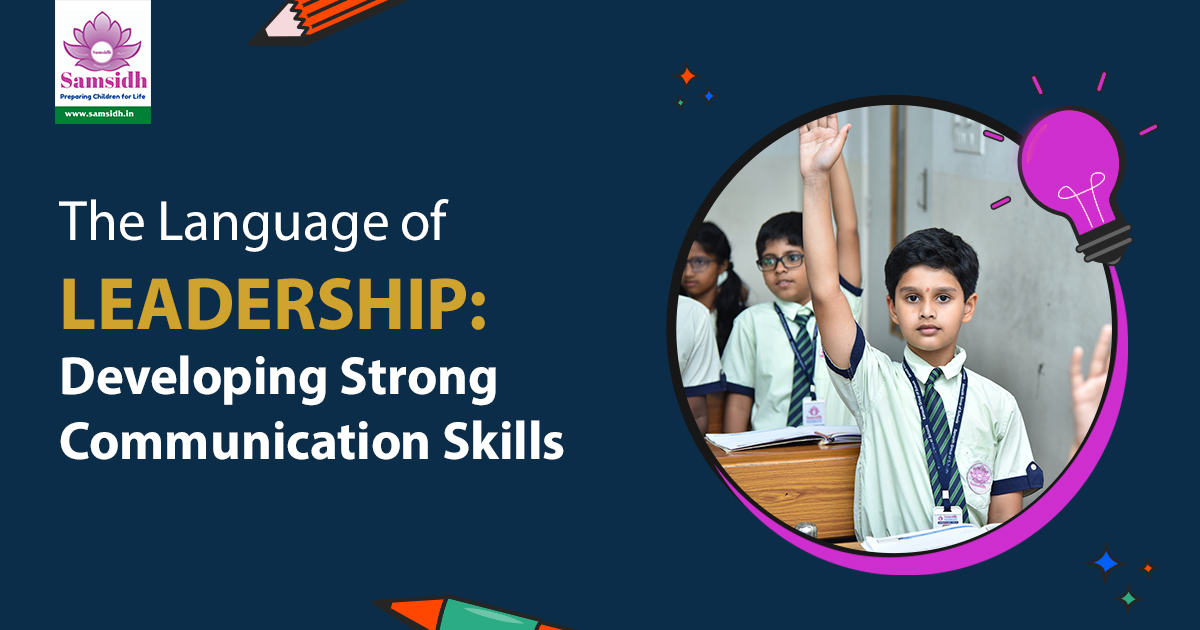
Communication skills for students are the ability to listen, speak, write and use body language clearly and respectfully. They improve marks, friendships and confidence, and are the base of leadership. Children build them fastest through daily reading, structured speaking practice, debate and drama, and honest feedback at school and at home.
A child who can explain an idea clearly will present better, answer better and lead better. This guide covers what communication skills are, why they matter, 12 practical ways to build them, and activities by age.
What are communication skills for students?
Communication skills are how a student shares and receives information. They fall into four groups:
| Type | What it includes | Example in school |
|---|---|---|
| Verbal | Clear speech, vocabulary, tone | Answering in class, presentations |
| Non-verbal | Eye contact, posture, gestures, facial expression | Standing confidently during a speech |
| Written | Grammar, structure, clarity | Essays, emails, project reports |
| Listening | Attention, questioning, empathy | Group work, following instructions |
Strong communicators balance all four. Listening is the most overlooked and the most important.
Why are communication skills important for students?
- Better academic results: clear written answers and presentations score higher in competency-based CBSE assessments.
- Stronger relationships: children who express feelings calmly have fewer conflicts with peers.
- Confidence and self-esteem: being heard builds a child’s belief in their own ideas.
- Leadership: every leadership role, from class monitor to team captain, depends on persuading and listening.
- Career readiness: employer surveys such as NACE’s annual Job Outlook consistently rank communication among the skills employers value most.
CBSE also runs an Assessment of Speaking and Listening (ASL) as part of its English curriculum, so these skills directly affect marks.
How can students improve their communication skills? 12 proven ways
1. Listen actively. Look at the speaker, don’t interrupt and summarise what you heard before replying.
2. Think before you speak. Use the PREP structure: Point, Reason, Example, Point.
3. Read every day. Twenty minutes of reading grows vocabulary and sentence variety faster than any drill.
4. Write every day. A short journal entry or summary trains clear, organised thinking.
5. Speak in complete sentences. At home, ask open questions that need more than “fine” or “yes”.
6. Know your audience. Speak differently to a teacher, a friend and a younger child.
7. Use confident body language. Stand straight, keep eye contact and use open gestures.
8. Mind your tone. The same words can sound kind or rude. Practise calm, respectful tone.
9. Ask good questions. Curious questions show listening and keep conversations going.
10. Practise public speaking. Show-and-tell, assemblies, debates and Model United Nations build courage step by step.
11. Tell stories. Retelling a book or a day’s event teaches sequence, detail and engagement.
12. Seek and use feedback. Record a speech, watch it back and improve one thing at a time.
Communication activities by age
| Age group | Activities that work |
|---|---|
| 3–6 years | Picture talks, rhymes, puppet play, “tell me about your drawing” |
| 7–10 years | Show-and-tell, story retelling, reading aloud, simple role-play |
| 11–14 years | Class debates, presentations, journaling, group projects |
| 15–18 years | MUN, elocution, interviews, formal writing, leading a club |
How parents can build communication skills at home
- Daily dinner-table talk: one question each, phones away.
- Ask “why” and “how”: move beyond yes/no answers.
- Model good listening: children copy what they see.
- Praise effort, not perfection: nervous speakers need encouragement.
- Limit passive screen time: conversation builds language, scrolling doesn’t. See our tips on balancing screen time and study time.
Emotional calm matters too. A child who can name their feelings communicates more clearly, which is why mindful parenting and communication go hand in hand.
How Samsidh schools build communication and leadership
At Samsidh, communication is practised every day, not taught once a year:
- Character Development and Leadership Programme with structured speaking, teamwork and responsibility roles.
- Samsidh Model United Nations (SMUN), where students research, debate and negotiate like diplomats.
- Samsidh Change Makers Club for student-led social projects.
- Assemblies, debates and presentations across all grades.
- Written feedback on assignments so writing improves term by term.
- Multimodal classrooms that suit every kind of learner. Read how CBSE schools support different learning styles.
Communication is one of the top life skills every CBSE student must master. Admissions for 2027-28 are open. Use our CBSE admission checklist or book a campus visit.
Frequently asked questions
What are the 4 types of communication skills?
Verbal, non-verbal, written and listening. Students need all four to communicate well.
How can I improve my child’s communication skills?
Read together daily, ask open questions, encourage storytelling and give gentle feedback. Speaking activities like debate and drama build confidence fast.
At what age should children start building communication skills?
From early childhood. Talking, reading and play from age 2–3 lay the foundation; structured speaking practice can start in primary school.
How does communication help leadership?
Leaders explain goals, listen to their team and resolve conflicts. All three depend on communication.
Does CBSE assess communication skills?
Yes. CBSE includes speaking and listening assessment within Frequently Asked Questions English, and competency-based questions reward clear written expression.