
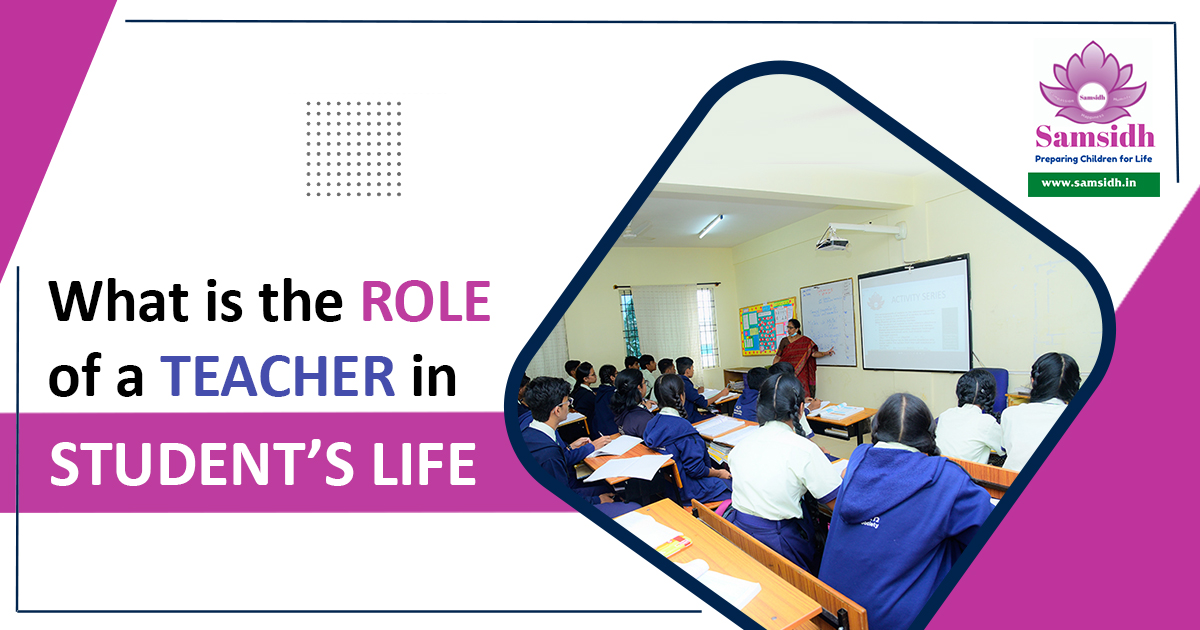
What Is the Role of a Teacher in a Student's Life?
A teacher’s role goes far beyond delivering lessons. Teachers guide academic learning, shape character and discipline, provide emotional support, and often serve as the first adult role model a child looks up to outside their family. Their influence touches cognitive development, social skills, confidence, and long-term life outcomes — not just exam scores.
The Academic Role of a Teacher
The most visible part of a teacher’s role is academic: explaining concepts, structuring lessons, assessing progress, and adapting teaching methods to different learning speeds. But strong teachers do more than transmit information —they:
- Identify learning gaps early and adjust instruction accordingly
- Build curiosity and independent thinking rather than rote memorization
- Prepare students for structured assessments (CBSE boards, competitive exams) while still encouraging genuine understanding
- Introduce study techniques that extend beyond the classroom — see our guide on using NCERT Fingertips to excel in maths for a practical example of this in action
The Teacher's Role in Moral and Character Development
Alongside academics, teachers play a significant part in shaping a student’s values — honesty, responsibility, empathy, and respect for others. This happens less through direct instruction and more through daily modeling: how a teacher handles conflict, fairness in grading, and how they treat every student regardless of ability.
This is also where classroom habits translate into life skills. Our related guide on the top life skills every CBSE student should master breaks down exactly which of these habits schools should be actively reinforcing.
Emotional Support: The Teacher as a Trusted Adult
For many students, a teacher is the first non-family adult they trust with problems — academic stress, friendship issues, or struggles at home. A teacher who notices when a student is withdrawn, anxious, or struggling silently can make an outsized difference simply by checking in.
This role has grown even more important with rising academic pressure and screen-based social lives. Teachers who build genuine rapport tend to see better engagement, participation, and long-term outcomes from their students — well beyond what curriculum alone can achieve.
Teacher vs. Parent: Do They Play the Same Role?
Parents and teachers both shape a child’s development, but their roles are different, not competing:
| Parents | Teachers | |
|---|---|---|
| Primary domain | Home values, emotional foundation | Academic growth, structured learning |
| Influence style | Continuous, personal | Structured, social/peer-context |
| Feedback type | Unconditional support | Objective assessment & correction |
| Unique strength | Deep individual knowledge of the child | Comparative view across many students |
The two roles work best when they reinforce each other rather than operate in isolation — a teacher flagging a concern to a parent early, for example, is often more effective than either acting alone.
How the Teacher's Role Has Changed in Modern (CBSE/Digital) Education
The role of a teacher has shifted noticeably in the last decade:
- From lecturer to facilitator — modern classrooms lean more toward guided discovery and discussion than pure lecture format
- Digital integration — teachers now guide students through both physical and online resources, requiring comfort with ed-tech tools
- NEP 2020 influence — India’s National Education Policy pushes for more skill-based, holistic learning rather than pure rote/exam focus, expanding what’s expected of a teacher’s role
- Increased emotional-support demands — as mentioned above, teachers are now more actively involved in student mental well-being than in previous generations
Why the Role of a Teacher Still Matters More Than Ever
Even with growing access to online courses, ed-tech apps, and self-paced learning tools, a good teacher provides something automation can’t fully replace: contextual judgment about this specific student, real-time emotional read of a classroom, and mentorship that shapes character, not just knowledge. Technology can support a teacher’s role — it can’t substitute for it.
Key Takeaways
- A teacher’s role spans four areas: academic instruction, character development, emotional support, and mentorship.
- Teachers and parents play complementary, not competing, roles in a student’s growth.
- Modern education (especially under NEP 2020 and CBSE reforms) has expanded the teacher’s role toward facilitation, digital literacy, and student well-being.
- The human elements of teaching — judgment, empathy, mentorship — remain difficult to replace with technology alone.
Frequently Asked Questions
1. What is the role of a teacher in a student’s life?
A teacher guides academic learning, supports emotional well-being, models character and values, and often serves as a student’s first trusted adult mentor outside the family.
2. How is a teacher’s role different from a parent’s role?
Parents provide continuous, unconditional emotional support at home, while teachers offer structured academic guidance and an objective, comparative view of a child’s progress in a social/school setting. The two roles work best together.
3. Has the role of a teacher changed with digital education?
Yes. Modern teachers act more as facilitators than lecturers, guide students through both offline and online resources, and are increasingly involved in supporting student mental well-being, in part due to reforms like India’s NEP 2020.
4. Why is a teacher’s role still important with so much online learning available?
Because judgment about an individual student’s needs, real-time emotional support, and character mentorship are difficult to replicate through self-paced apps or online courses alone.
5. Can a teacher influence a student’s life beyond academics?
Yes. Teachers frequently shape a student’s confidence, values, study habits, and resilience — effects that often last well beyond the school years.
Related Reading
Explore more from our education blog: